
Commercial Star Ceilings for Bars, Lounges, Restaurants & Theaters: 2026 Design, Code & Cost Guide
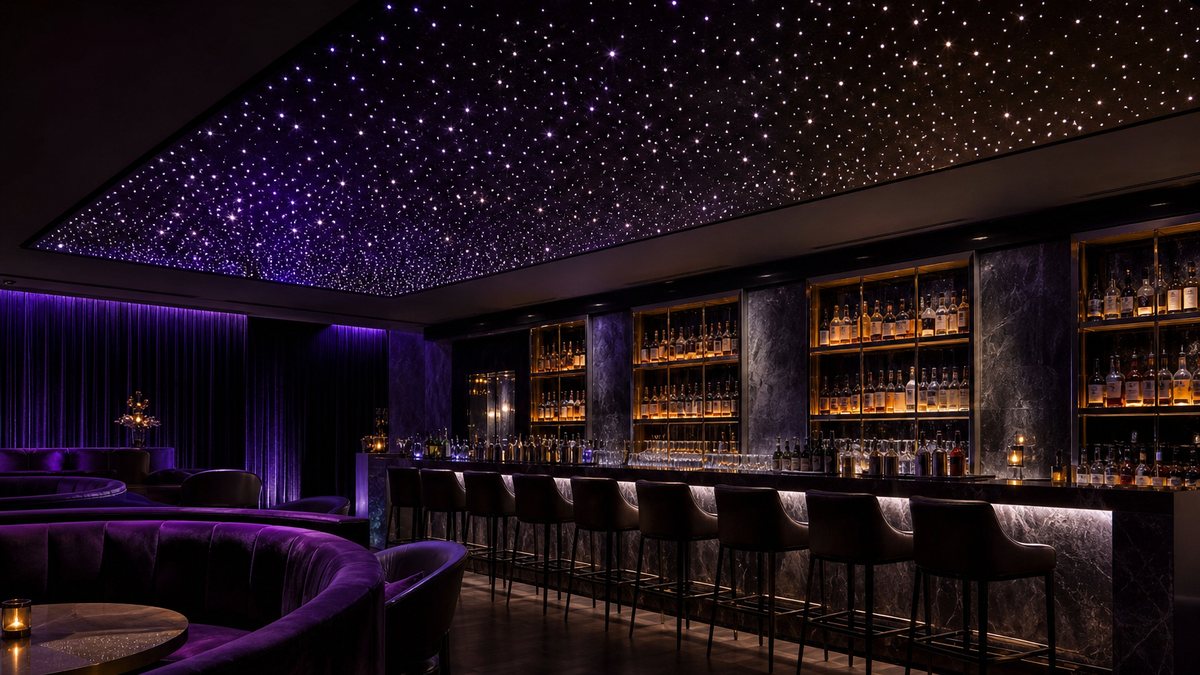
A commercial star ceiling is a fiber optic night sky built for a bar, lounge, restaurant, hotel, spa or commercial theater, and in 2026 most projects start at about $77 per square foot installed for a standard panel field before commercial factors like lift access, after-hours work and fire-rating paperwork are priced in. It is one of the few design upgrades that guests notice the second they walk in — and photograph before they order.
But a venue is not a bedroom. Your ceiling has to meet interior finish rules, survive kitchen grease and cleaning crews, work around sprinklers, speakers and HVAC diffusers, and go in without shutting your doors for a week. At American Starlight Ceilings, we plan hospitality ceilings around those realities first, and the stars second.
This guide covers the best layouts for bars, lounges, restaurants, hotel rooms and commercial theaters, the code and safety questions to settle before you order, real budget examples by space size, how to install without losing a night of revenue, and the questions to ask any installer before you sign.
✦ Quick Answer: What Does a Commercial Star Ceiling Cost?
Commercial star ceilings are quoted per design, but standard premade fiber optic panels give you a reliable starting point:
- Panels: about $55 per sq ft — roughly $220 for a 2′×2′ panel and $440 for a 2′×4′ panel
- Installation: about $22 per sq ft on a standard ceiling, for about $77 per sq ft installed
- Typical venue fields: a 10′×20′ bar field is about $15,400; a 20′×30′ lounge field is about $46,200
- Full commercial range: roughly $15,000 – $150,000+ depending on area, ceiling height and effects
- Commercial factors (lifts, after-hours crews, fire-rating documentation, plenum-rated cable) are quoted per project
- Effects like twinkle, shooting stars and RGB color are custom add-ons with extra cost
- Warranty: 2-year product warranty plus a lifetime workmanship warranty on professional installation
Why Bars, Restaurants and Lounges Choose Star Ceilings
Hospitality design is about mood. Lighting sets that mood faster than any other element in the room. A star ceiling does three jobs at once: it creates a signature look people remember, it adds soft ambient light without glare, and — when you use acoustic panels — it cuts the echo that makes busy dining rooms exhausting.
It also gives your space a reason to be shared. A glowing night sky over a cocktail bar or private dining room is the kind of detail guests post, tag and come back for. That turns a ceiling into a marketing asset that keeps working every night you are open.
Why fiber optic and not LED strips or projectors?
Fiber optic stars are pinpoints of light carried through clear PMMA strands. There is no electricity and no heat at the ceiling face — the only powered part is the light engine, which sits out of sight. Star projectors look blurry on textured ceilings and wash out with any room light. LED dots look like dots, run warm and fail one by one. For a ceiling that must look sharp for years under real commercial use, fiber optic is the standard. Our partners at fiber optic lighting solutions handle the largest custom fiber builds when a venue needs one.
| Option | Look | Heat at Ceiling | Commercial Fit |
|---|---|---|---|
| Fiber optic star panels | Sharp pinpoint stars, mixed sizes | None | Excellent — fast install, acoustic options |
| Hand-drilled fiber | Sharp stars, density varies | None | Good for very large or odd shapes; slow install |
| LED dot panels | Visible dots, less realistic | Some | Fair — shorter life, harder to repair |
| Star projectors | Soft, blurry, washes out | At the device | Poor — novelty only |
Star Ceiling Ideas by Venue Type
The right layout depends on how guests use the room. Here is what works best in the spaces we design most often.
Bar room star ceilings
Put the star field directly over the bar top and the first row of stools. That is where guests look up, where photos happen, and where the low ceiling light makes bottles and backbar lighting pop. Keep a plain border around the field for pendants, sprinkler heads and speakers. A 10′×20′ field over a typical bar is the most common size we quote.
Lounge and nightclub star ceilings
Lounges usually want more coverage and more drama. A larger field over the seating area, slow twinkle and a dimmable white base create a calm, premium feel. Color-changing RGB is popular for late-night shift changes in mood — but remember, color and motion effects are custom add-ons with extra cost, not part of the base panel price.
Restaurant star ceilings
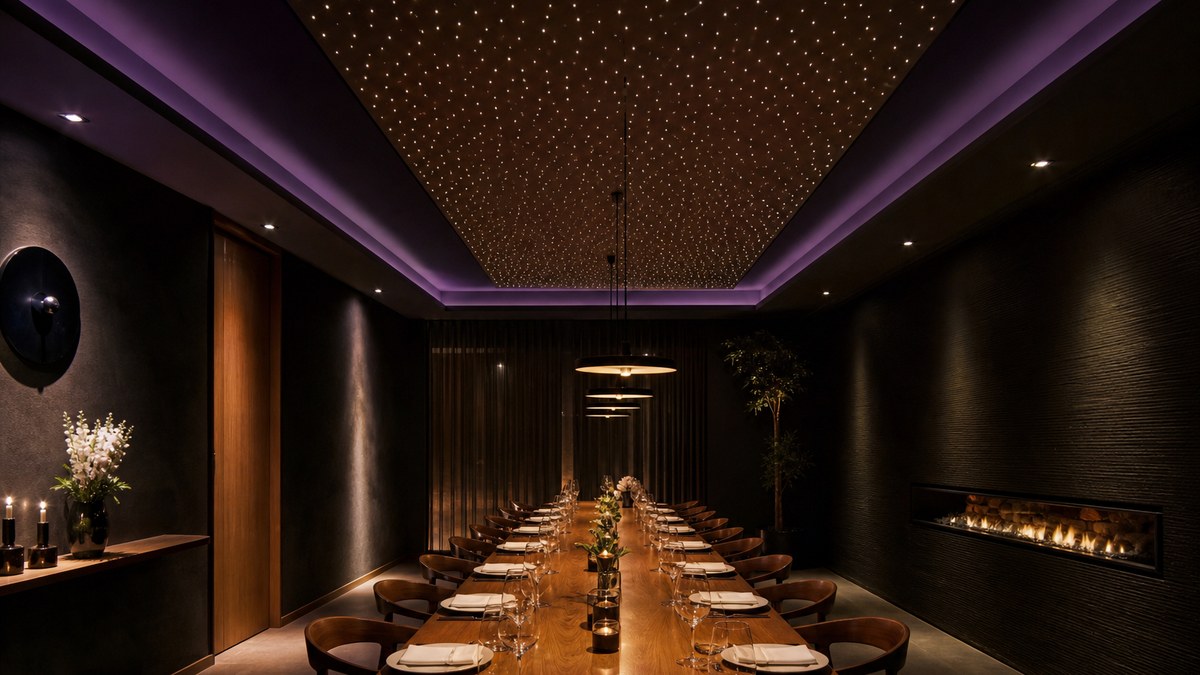
In dining rooms, the star ceiling should support the food, not compete with it. We recommend warm white stars at a lower brightness, centered over the main dining floor or a private dining room. Keep the field away from the kitchen pass and any area with heavy grease or steam, and coordinate with your table lighting so plates still look great.
Hotel rooms and suites
Hotel room star ceilings are a strong upsell for themed suites and honeymoon rooms. A field over the bed, controlled from the bedside or room automation, gives guests a reason to book that specific room. Our starlight ceiling for bedroom layouts translate directly to suites.
Spas and wellness rooms
Treatment rooms, relaxation lounges and float rooms benefit from a soft, dimmable star field. Guests spend much of their visit lying face up, so the ceiling is the main view. Low brightness and a slow twinkle add-on work better here than bright effects.
Commercial theaters and screening rooms
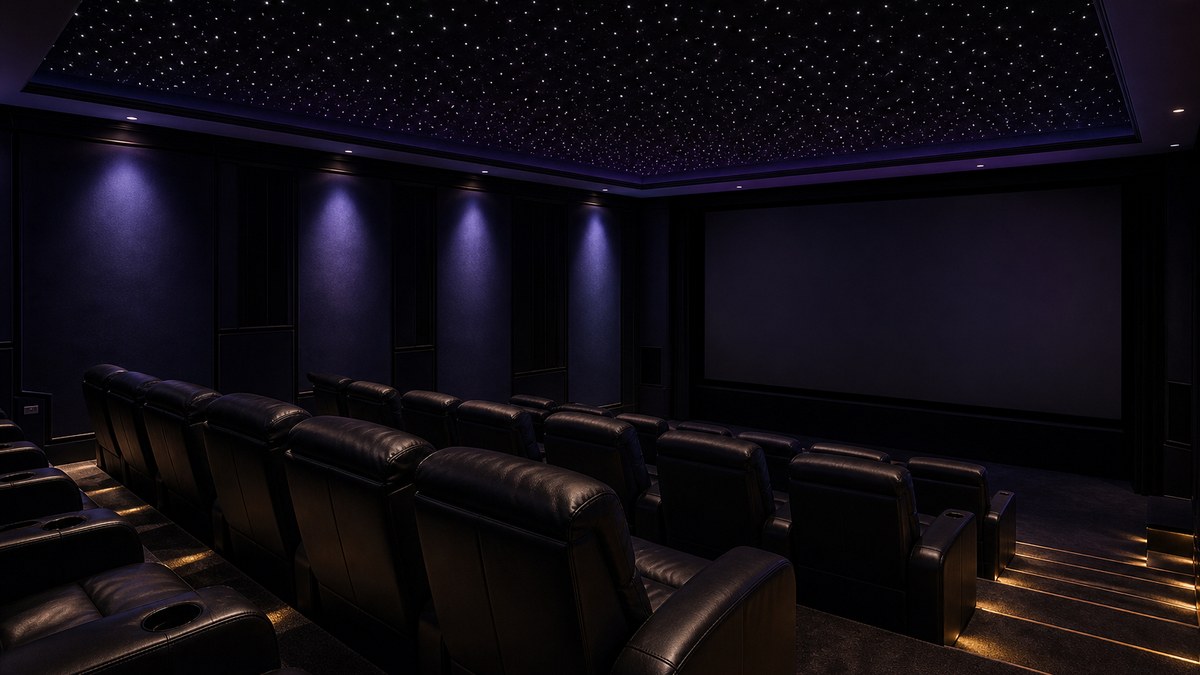
Boutique cinemas, private screening rooms, sports bars with big screens and corporate theaters use the same rules as a home theater, just larger. Stop the field 2–3 feet before the screen so no stray light hits the image, keep speakers in the border, and use acoustic panels to control reflections. Our home theater star ceiling cost guide explains the room math, and it scales up for commercial rooms.
Commercial Code, Fire and Safety: What to Settle First
This is the part most residential installers skip, and it is the part that can stop a project at inspection. Bars, restaurants, theaters and lounges are generally classified as assembly occupancies under the International Building Code. That means your ceiling finish, wiring and layout get more scrutiny than a home.
Interior finish and flame spread ratings
Ceiling finishes in commercial spaces are rated by the ASTM E84 tunnel test. The result is a flame spread index that puts a material into a class: Class A (0–25), Class B (26–75) or Class C (76–200). The class your ceiling needs depends on the occupancy, whether the building is sprinklered, and where the finish is located. Many venues and fire marshals simply ask for Class A to keep things easy.
Do this before you order: Ask your installer for the panel facing's ASTM E84 test data and confirm the required class with your architect or local fire marshal. Requirements vary by code edition and city, so the local authority always has the final word.
Sprinklers, smoke detectors and exit signs
Star panels should never block sprinkler heads, smoke detectors or required exit lighting. A good layout maps every device first and leaves clean cutouts or a border around them. Plain-ceiling borders of 8–10 inches around devices also look more natural than stars crowding a sprinkler head.
Low-voltage wiring and plenum spaces
Premade panels connect with low-voltage Cat5 cable in a daisy chain, and the light engine plugs into a standard outlet. In many commercial buildings, the space above a drop ceiling is a return-air plenum. Cable in a plenum generally must be plenum-rated (marked CMP or CL2P) under the National Electrical Code. Tell your installer early whether your ceiling cavity is a plenum so the right cable is quoted.
Heat, electricity and guest safety
Fiber optic strands carry light only — no heat and no current reach the ceiling face. That makes fiber one of the safest ways to put light directly over guests. Light engines should be accessible for service, ventilated, and placed away from heat sources such as kitchen exhaust or hot equipment.
Commercial Ceiling Types and How Star Panels Fit
Most commercial spaces have one of four ceiling types. Each has a different install path.
| Ceiling Type | Common In | Star Ceiling Approach | Install Notes |
|---|---|---|---|
| T-bar drop ceiling | Restaurants, offices, sports bars | Lay-in 2′×2′ or 2′×4′ star tiles | Fastest; confirm grid size and plenum rating |
| Drywall / hard lid | Lounges, hotel rooms, spas | Surface-mount panel field | Mount from center line out; one outlet nearby |
| Open / exposed ceiling | Industrial bars, breweries | Suspended cloud or floating panel island | Custom frame and hanging hardware; quoted per design |
| High / vaulted ceiling | Event venues, lobbies | Large field or custom shapes | Lift access and extra labor quoted per project |
Drop-ceiling venues have it easiest. Lay-in star tiles simply replace existing tiles in the grid — see our star ceiling tiles for drop ceilings guide for grid sizes, edge types and clearance. The same 15/16″ and 9/16″ tee rules apply in a restaurant as in a basement.
Acoustics: The Hidden Win in Busy Venues
Hard ceilings bounce sound. In a full restaurant or bar, that echo builds until guests have to shout across the table. Acoustic star panels absorb those reflections at the ceiling, where much of the problem starts. You get a better-sounding room and a star field in one product instead of two separate purchases.
Drywall is close to NRC 0.05, meaning it reflects almost everything. Our acoustic panels offer NRC 1.0+ options, which absorb nearly all mid and high frequency sound that hits them. For a deeper look at ratings and placement, read our acoustic star ceiling panels guide.
Important: Acoustic panels reduce echo inside the room. They do not soundproof — they will not stop music from reaching the apartment or office upstairs. If noise transfer is a concern, plan soundproofing in the ceiling structure separately.
How Much Does a Commercial Star Ceiling Cost?
Every commercial project gets a custom quote, but the base numbers are the same as our standard panels: about $55 per square foot for panels and about $22 per square foot for installation on a standard ceiling, or about $77 per square foot installed. Commercial factors are then added on top as separate line items.
Commercial star ceiling cost by space size
| Project | Field Size | Panels Only (~$55/sq ft) | Installed Starting Point (~$77/sq ft) |
|---|---|---|---|
| Hotel suite over bed | 8′ × 10′ (80 sq ft) | $4,400 | $6,160 |
| Bar top field | 10′ × 20′ (200 sq ft) | $11,000 | $15,400 |
| Private dining room | 12′ × 24′ (288 sq ft) | $15,840 | $22,176 |
| Lounge seating area | 20′ × 30′ (600 sq ft) | $33,000 | $46,200 |
| Commercial screening room | 24′ × 36′ (864 sq ft) | $47,520 | $66,528 |
| Large venue / event space | 2,000+ sq ft | $150,000+ (custom quote) | |
These figures are starting points for a standard ceiling height and layout. For a full breakdown of what moves any star ceiling price, read our starlight ceiling cost guide and our star ceiling panels price guide.
Commercial factors that change the quote
- Ceiling height: ceilings above ladder height need a scissor lift or scaffolding.
- After-hours or overnight work: installing while you are closed protects revenue but changes crew scheduling.
- Fire-rating documentation: test data and submittals for your architect or fire marshal.
- Plenum-rated cable: required in many commercial ceiling cavities.
- Device coordination: cutouts or borders around sprinklers, detectors, speakers and diffusers.
- Custom shapes: clouds, circles, logos or floating islands are quoted per design — see our custom starlight ceiling design options.
Custom effects are add-ons
Standard white starlight with dimming is included in base panel pricing. Effects are custom add-ons with extra cost:
| Custom Add-On | Typical Added Cost | Best Venue Fit |
|---|---|---|
| Twinkling effect | $300 – $1,000+ | Lounges, spas, restaurants |
| Shooting stars | $500 – $2,000+ | Bars, theaters, event spaces |
| RGB color changing | $500 – $2,000+ | Nightclubs, lounges |
| Smart / building control integration | $500 – $1,500+ | Hotels, multi-room venues |
| Constellation mapping | $1,000 – $3,000+ | Signature rooms, opening dates, brand stories |
Want the full menu of upgrades with real budgets? Our custom star ceiling cost guide breaks down every effect.
Budget tip: A center field over the bar or main seating, with a plain border, keeps most of the impact and can cut square footage by 30% or more. It also leaves room for the sprinklers, speakers and diffusers every commercial ceiling has.
Planning a Bar, Restaurant or Lounge Ceiling?
Send us your floor plan or ceiling dimensions. We'll map your star field around sprinklers, speakers and diffusers, and send a clear quote with product, installation and commercial factors priced separately.
(702) 738-2218 Get Your Free Quote →How a Commercial Star Ceiling Install Works
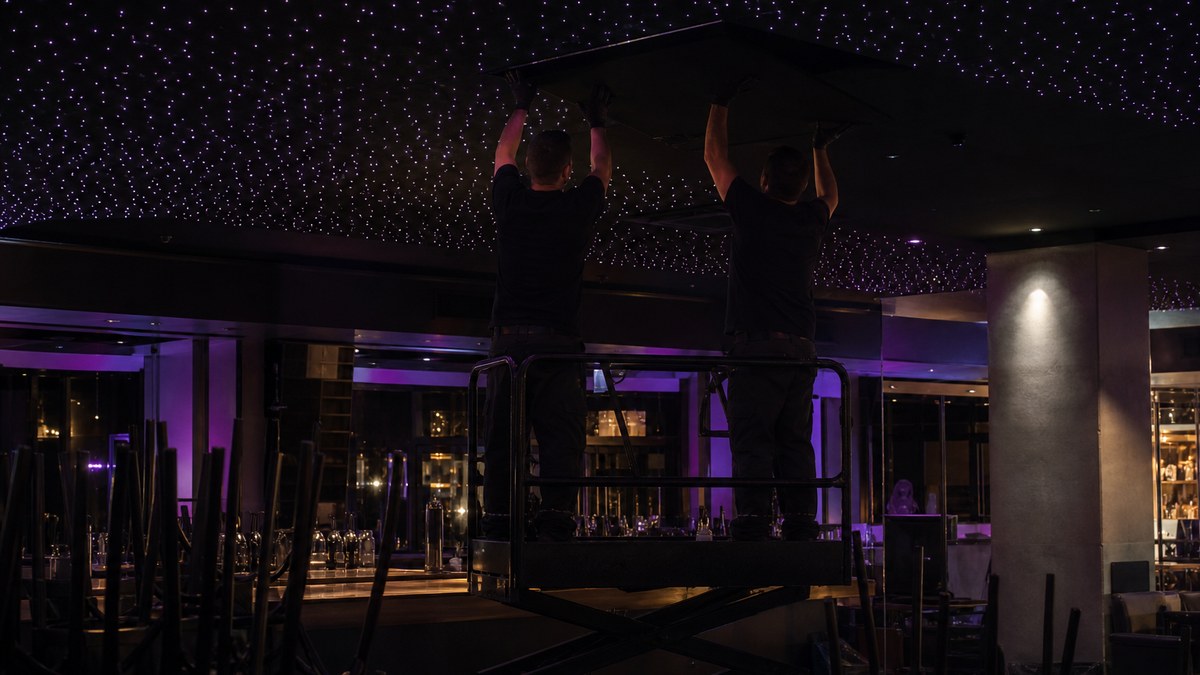
Premade panels are the reason a venue can add a star ceiling without closing for a week. Nothing is drilled star by star on site. A professional 2-person crew covers about 75–90 square feet per 8-hour day on a standard ceiling, and larger crews scale that up for bigger rooms.
- Site survey: measure the ceiling, confirm the ceiling type, map sprinklers, detectors, speakers, lights and diffusers, and check whether the cavity is a plenum.
- Design and submittals: lay out the field, choose effects, and prepare fire-rating data for your architect or fire marshal.
- Power planning: confirm one accessible outlet for the light engine; your electrician adds one if needed.
- Scheduling: book the install for closed hours, slow days or a planned renovation window.
- Installation: mount panels from a center reference line or drop tiles into the grid, then link them with low-voltage cable.
- Commissioning: power test, set dimming levels and effects, and train your staff on the controls.
For the full step-by-step, see our starlight ceiling installation guide, and learn more about our professional starlight ceiling installation service.
Cleaning, Maintenance and Lifespan in Commercial Use
Commercial ceilings get more dust, more grease and more cleaning than residential ones. Plan for it from day one.
- Placement: keep star fields away from cooking lines, fryers and exhaust hoods where grease settles.
- Dust: dark rings near HVAC diffusers are common on any ceiling. Leave a border around diffusers and dust panels gently with a soft brush or vacuum attachment.
- Light engine access: keep the engine where staff or a technician can reach it without removing panels.
- Lifespan: quality PMMA fiber stays clear for 20+ years and never burns out. LED light engines are rated for 50,000+ hours.
- Warranty: a 2-year product warranty on panels and a lifetime workmanship warranty on professional installation.
Questions to Ask a Commercial Star Ceiling Installer
A residential installer is not always ready for a commercial job. Ask these questions before you sign:
- Can you provide ASTM E84 test data for the panel facing?
- Have you installed in drop-ceiling grids, hard lids and open ceilings?
- Will you use plenum-rated cable where the code requires it?
- Can you work after hours or around our opening schedule?
- How will you lay out the field around sprinklers, detectors and speakers?
- Are product, installation and commercial factors priced as separate line items?
- What product and workmanship warranties come in writing?
Our guide to finding a star ceiling installer near you lists more red flags. You can see the cities we serve on our locations page, browse finished projects in our starlight ceiling gallery, and learn about the full scope of our commercial starlight ceilings and commercial lighting services. Product specs live on our starlight ceiling panels page.
Commercial Lighting Applications From Our Network
A star ceiling is often one piece of a larger hospitality lighting plan. Our partner network handles the rest of the building. In Texas, venues work with teams providing LED lighting solutions in Dallas, Fort Worth LED lighting, LED lighting in Plano, commercial LED lighting in Arlington and Irving LED lighting services, plus Texas-wide LED lighting and wholesale LED solutions for multi-location brands.
Hotels and resorts with rooftop bars or pool decks can pair the ceiling with pool and aquatic lighting. Building a new bar, pop-up venue or screening room from scratch? Modular building solutions and modular structures in Dallas can deliver the space, and we'll finish it with the stars.
Frequently Asked Questions About Commercial Star Ceilings
How much does a commercial star ceiling cost?
Commercial star ceilings are quoted per design, but standard premade fiber optic panels start at about $55 per square foot, or about $77 per square foot installed on a standard ceiling. A 10x20 bar field is about $15,400 installed and a 20x30 lounge field is about $46,200, with most commercial projects ranging from $15,000 to $150,000 or more.
Can you put a star ceiling in a restaurant or bar?
Yes. Fiber optic star ceilings are popular in restaurants, bars, lounges and hotels. The field is usually placed over the bar top or main seating, kept away from cooking lines and grease, and laid out around sprinklers, detectors, speakers and HVAC diffusers.
Do commercial star ceilings meet fire code?
They can, but you must confirm it before ordering. Commercial ceiling finishes are rated by the ASTM E84 test into Class A, B or C, and the required class depends on the occupancy, sprinklers and location. Ask your installer for test data and confirm the requirement with your architect or local fire marshal.
Do fiber optic star ceilings get hot?
No. Fiber optic strands carry only light, so no heat or electricity reaches the ceiling surface. The only powered part is the light engine, which is mounted out of sight where it can be ventilated and serviced.
Can star ceiling panels go in a commercial drop ceiling?
Yes. Lay-in star tiles in 2x2 and 2x4 sizes replace standard tiles in a T-bar grid. If the space above the grid is a return-air plenum, the low-voltage cable generally needs to be plenum-rated.
How long does it take to install a star ceiling in a bar or restaurant?
A 2-person crew installs about 75 to 90 square feet of premade panels per day on a standard ceiling, so a 200 square foot bar field takes about 2 to 3 days. Installs can be scheduled after hours or on closed days to avoid losing revenue.
Do star ceilings help restaurant acoustics?
Acoustic star panels do. Drywall has an NRC of about 0.05, while acoustic star panels offer NRC 1.0 and higher options that absorb echo at the ceiling. They improve sound inside the room but do not soundproof it.
Are twinkling and color-changing effects included?
No. Standard white starlight with dimming is included in base pricing. Twinkle typically adds $300 to $1,000 or more, shooting stars and RGB color each add $500 to $2,000 or more, and constellation mapping adds $1,000 to $3,000 or more as custom add-ons.
How long does a commercial star ceiling last?
Quality PMMA fiber optic strands stay clear for 20 years or more and never burn out, and LED light engines are rated for 50,000 hours or more. Our panels include a 2-year product warranty, and professional installation includes a lifetime workmanship warranty.
How do you clean a star ceiling in a commercial space?
Dust panels gently with a soft brush or a vacuum with a brush attachment, and avoid soaking the face. Keep star fields away from fryers and exhaust hoods, and leave a plain border around HVAC diffusers where dust collects.
Give Your Venue a Ceiling Guests Remember
From a single bar-top field to a full lounge or screening room, we'll design your sky around your code requirements, devices and opening hours, then install it with a 2-year product warranty and a lifetime workmanship warranty.
(702) 738-2218 Get Your Free Quote →