
Color Changing Star Ceiling: 2026 Guide to RGB vs RGBW Panels, Remote & App Control, Effects & Cost
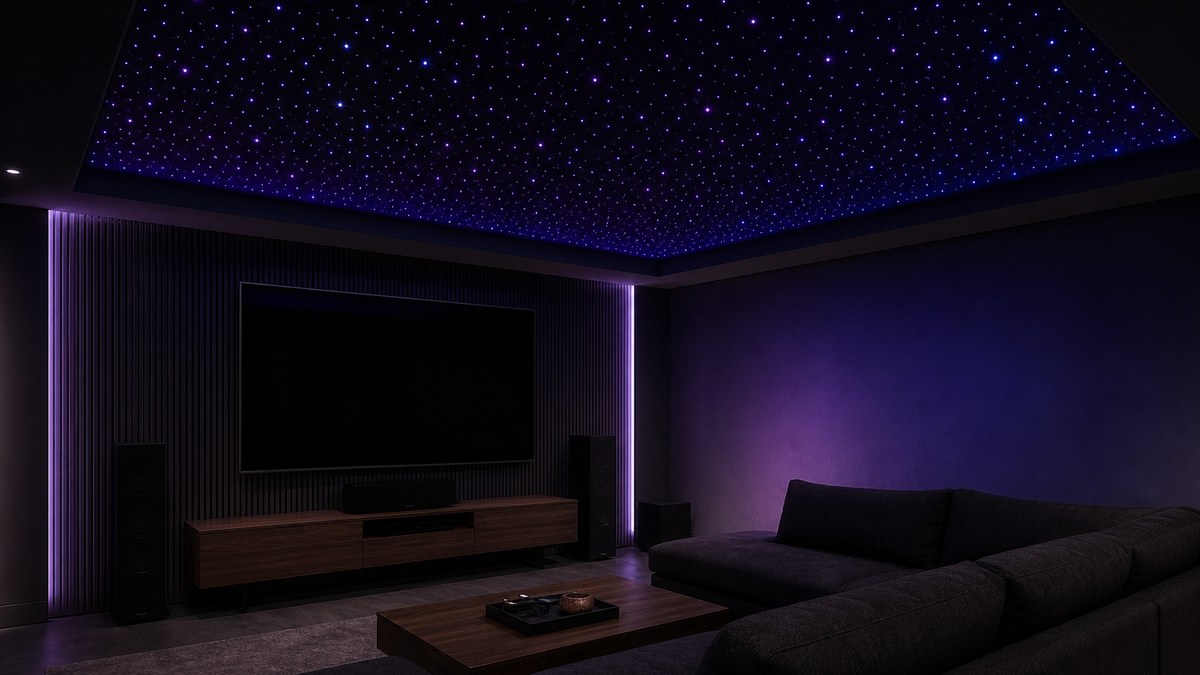
A color changing star ceiling uses an RGB or RGBW light engine to send colored light through hundreds of fiber optic strands, so the same night sky can glow crisp white for movie night, deep blue for sleep and violet or magenta for a party. In 2026 the color upgrade is a custom add-on that typically adds $500 to $2,000+ on top of a standard star ceiling at about $77 per square foot installed.
Color is the most requested upgrade we quote — and the one people most often get wrong. Some kits make white stars look blue or pink. Some remotes stop working the moment the light engine goes behind a wall. And some "color changing" ceilings are really just LED strips with a star pattern printed on top. At American Starlight Ceilings, we plan color the same way we plan the stars: around how you will actually use the room.
This guide explains how color changing star ceilings work, the real difference between RGB and RGBW, your control options (remote, app, Wi-Fi, voice and pro control systems), the best colors and effects by room, what it costs for real room sizes, and the questions to ask before you order.
✦ Quick Answer: How Do Color Changing Star Ceilings Work and What Do They Cost?
The stars themselves never change. The light engine behind the ceiling changes the color it shines into the fiber bundle, and every star changes with it.
- Base ceiling: about $55 per sq ft for panels or about $77 per sq ft installed, with white starlight and dimming included
- RGB color changing: a custom add-on with extra cost, typically $500 – $2,000+ depending on room size and number of engines
- Choose RGBW, not plain RGB, if you want true white stars most nights — the dedicated white LED looks cleaner than mixed white
- Control: RF remote, phone app (Bluetooth or Wi-Fi), voice assistants, or pro systems like DMX for venues; smart integration is about $500 – $1,500+ extra
- Pair with effects: twinkle ($300 – $1,000+) and shooting stars ($500 – $2,000+) are separate add-ons
- Example: a 10′×12′ bedroom is about $9,240 installed, or roughly $9,740 – $11,240+ with color
- Warranty: 2-year product plus lifetime workmanship on professional installation
How a Color Changing Star Ceiling Actually Works
A fiber optic star ceiling has three parts: the ceiling surface or panel, the fiber strands, and the light engine (also called an illuminator). The fibers are clear PMMA strands that carry light from the engine to the tip, where each one becomes a star. The fibers do not make light and they do not hold color. They simply carry whatever the engine sends.
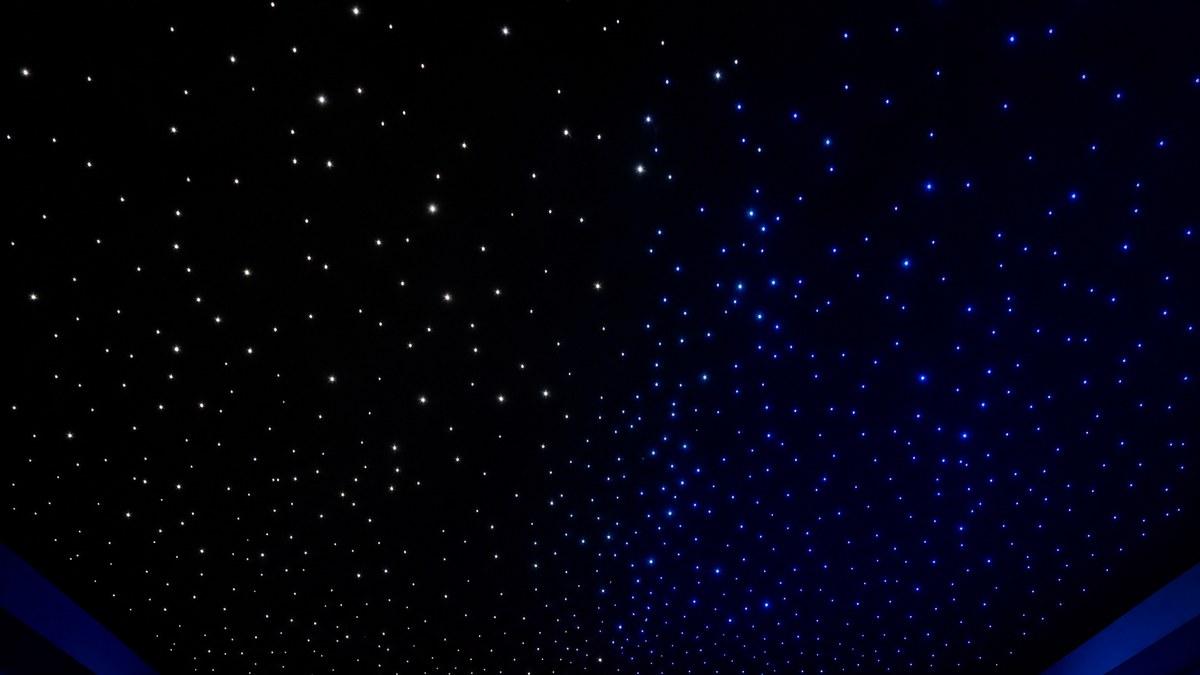
So "color changing" is really a light engine feature. A white-only engine has white LEDs. A color engine has red, green and blue LED channels (RGB), and better ones add a dedicated white channel (RGBW). When the engine mixes those channels, every star in the field shifts to the same color at the same time. That is also why you can add color to many existing fiber ceilings later — you swap or upgrade the engine, not the stars.
Why fiber optic beats LED strips for color
Some products sold as "color changing star ceilings" are LED strips or LED dot boards behind a perforated panel. You see the dots, the light is harsher and a single failed LED leaves a dark patch. Fiber optic stars are true pinpoints of mixed sizes. No heat or electricity reaches the ceiling face, the strands never burn out, and the only part that ever needs service is the engine. If you also want fiber in other parts of a home or venue, our partners at fiber optic lighting solutions build custom color fiber features well beyond the ceiling.
| Feature | White-Only Engine | RGB Engine | RGBW Engine |
|---|---|---|---|
| LED channels | White | Red, green, blue | Red, green, blue + true white |
| White star quality | Excellent | Fair — mixed white can look bluish or pink | Excellent |
| Colors available | White only | Millions of mixed colors | Millions of colors plus pastels and tinted whites |
| Best for | Classic night sky, theaters | Party rooms, kids' rooms, budget color | Bedrooms, theaters and lounges that want both |
| Pricing | Included in base (~$77/sq ft installed) | Custom add-on, typically $500 – $2,000+ | |
RGB vs RGBW Star Ceilings: Which Should You Choose?
This is the single most important decision in a color project. Plain RGB engines make white by turning red, green and blue on together. On paper that is white. On a ceiling, it usually looks slightly cold, slightly pink or slightly green, and it changes as the LEDs age. Since most people run their stars in white most of the time, that matters.
An RGBW engine adds a dedicated white LED. You get the clean, natural starlight of a white-only ceiling when you want it, and full color when you want that. RGBW also lets you make softer pastel colors and warm-tinted whites by blending white with color, which look far more natural on a ceiling than fully saturated colors.
Our rule of thumb: If you expect to use white more than half the time — bedrooms, theaters, living rooms — choose RGBW. If the room is mainly for parties, game nights or a kids' space where color is the point, a plain RGB engine can save money.
Warm white vs cool white stars
White engines and the white channel in RGBW engines come in different color temperatures. Cool white (around 6000K) looks crisp and bright like a clear desert sky. Warm white (around 3000K) feels softer and more relaxing. Ask which white your engine uses before you order, especially for bedrooms and restaurants, where warm white usually feels better.
Star Ceiling Remote, App and Smart Home Control Options
Color only helps if it is easy to use. The control method you choose decides whether your family actually changes colors or leaves the ceiling on one setting forever. Here are the common options, from simplest to most advanced.
| Control Type | How It Works | Pros | Watch Out For |
|---|---|---|---|
| RF remote | Handheld radio remote | Simple, works through walls and ceilings | Easy to lose; one remote per engine |
| IR remote | Infrared, like a TV remote | Cheap | Needs line of sight — fails when the engine is hidden |
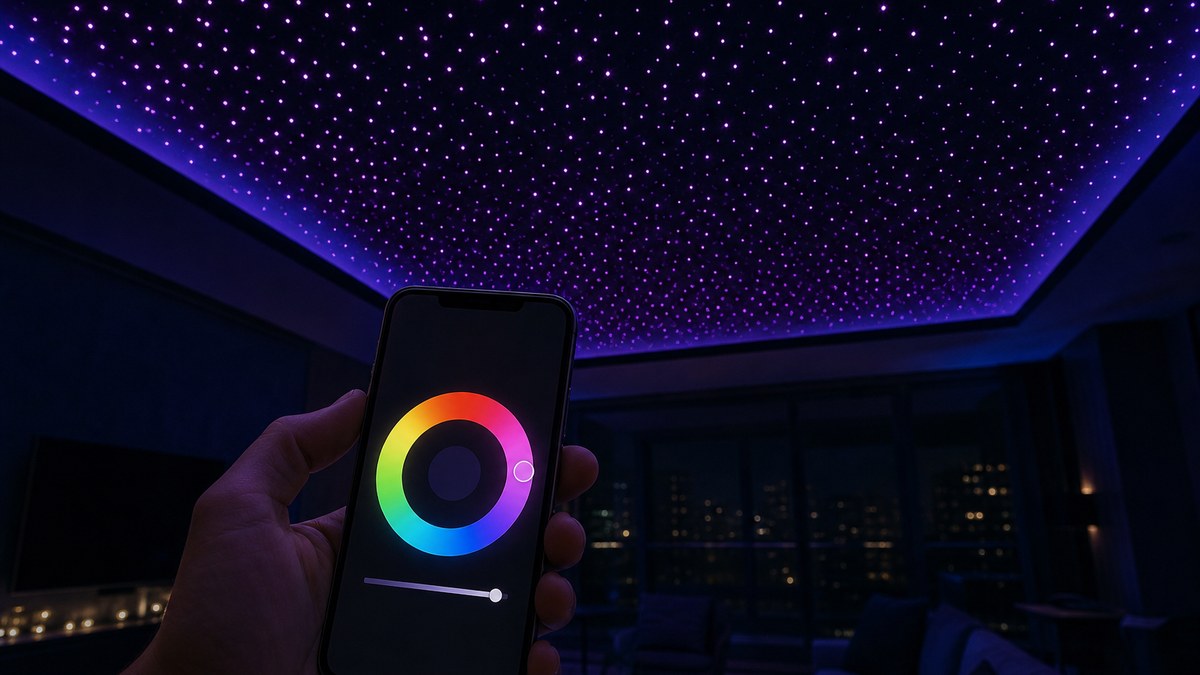
| Bluetooth app | Phone app within about 30 feet | Color wheel, scenes, music modes | Short range; often no remote access |
| Wi-Fi app + voice | Engine joins your home network | Schedules, voice assistants, control from anywhere | Needs solid Wi-Fi where the engine sits |
| Wall keypad / dimmer | Wired or wireless wall control | Always in the same place | Plan the location before drywall work |
| Pro control (DMX, RS-232, automation) | Ties into lighting or home automation systems | One-button scenes with the rest of the room | Needs an integrator; quoted per project |
Can I control my star ceiling with my phone or voice?
Yes, with a Wi-Fi capable engine or a smart home integration. Wi-Fi engines can usually be grouped into voice assistant routines, so "movie time" can dim the room lights, set the stars to soft white and start your show. Smart home integration is a custom add-on with extra cost, typically $500 to $1,500 or more, depending on the system and how many engines are involved.
Why your remote stops working
The most common support call we see from DIY color kits is a remote that "died." Usually it is an infrared remote pointed at an engine that was moved into an attic, soffit or closet. Radio (RF) and Wi-Fi controls do not need line of sight. If your engine will be hidden — and it should be — do not rely on infrared.
Color Effects and Modes Explained
Most color engines offer more than a fixed color. These are the modes you will see, and how they look on a real ceiling.
- Static color: one color held steady. The most used mode by far.
- Slow fade: the whole sky drifts between colors over seconds or minutes. Great for lounges and relaxation rooms.
- Jump / flash: fast color changes. Fun for parties, tiring for everyday use.
- Music sync: a built-in microphone or app reacts to sound. Popular in game rooms and bars.
- Twinkle: stars gently brighten and fade like a real sky. This is a separate custom add-on, typically $300 to $1,000+, created with a twinkle wheel or a multi-channel engine.
- Shooting stars: dedicated fiber runs that streak across the field. Also a separate custom add-on, typically $500 to $2,000+.
For a full menu of upgrades with real budgets, read our custom star ceiling cost guide and explore our custom starlight ceiling design options.
Design tip: Saturated colors look amazing in photos but can feel heavy after an hour. Most of our clients end up living in white, warm white and deep blue, and save bold colors for parties. Build scenes around those three first.
Best Colors and Settings by Room
Bedrooms
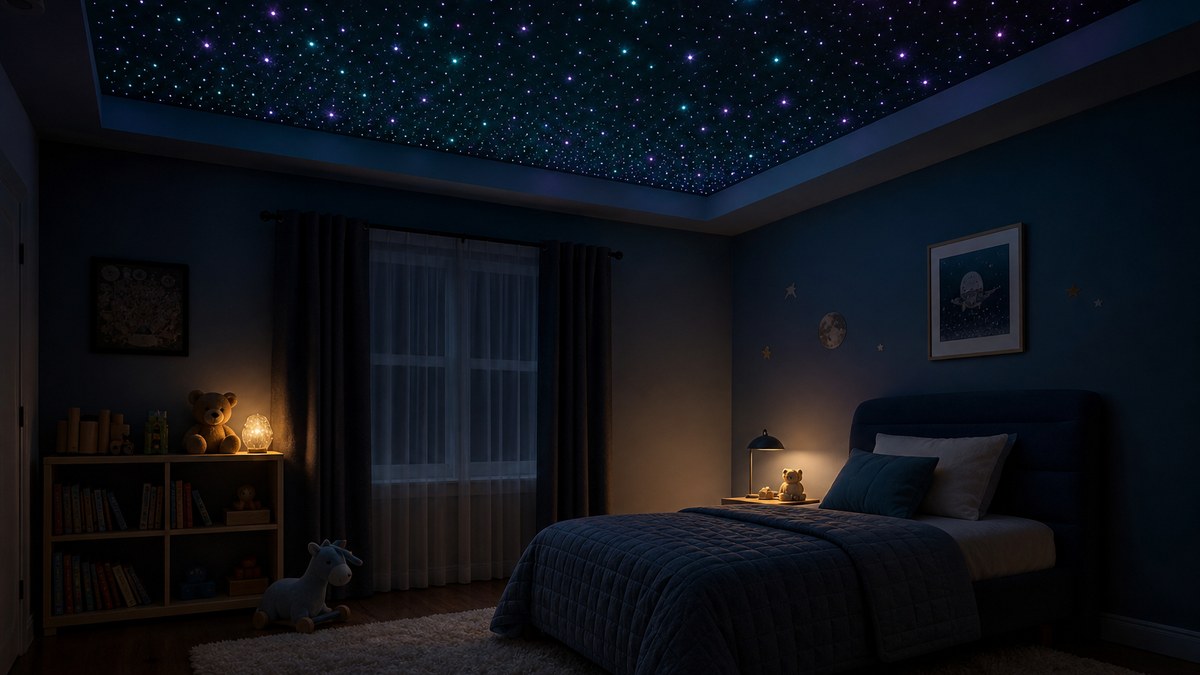
Use warm white or a dim deep blue at night. Avoid bright white and bright blue right before sleep, and use schedules to fade the stars down automatically. An RGBW engine is the best fit here. See our starlight ceiling for bedroom page for layout ideas.
Home theaters and media rooms
During a movie, the stars should be dim and neutral so they never compete with the screen. Color shines before the show and at intermission — and in a gaming room, matching the ceiling to the game is a lot of fun. Our home theater star ceiling cost guide covers room math, and our acoustic star ceiling panels guide explains how the same panels can tame echo.
Kids' rooms and nurseries
Kids love choosing a color. Keep brightness low, use slow fades instead of flashing modes, and set a schedule so the ceiling dims at bedtime. A simple RF remote or app is usually all you need.
Game rooms, basements and bars
This is where RGB earns its keep: music sync, team colors and party scenes. If your basement has a drop ceiling, lay-in star tiles work the same way — see our star ceiling tiles for drop ceilings guide.
Restaurants, lounges and hotels
Venues use color to shift the mood from dinner to late night. Warm white during service, deeper blues and violets after 10 p.m. Commercial rooms often tie the engine into the venue's lighting control. Our commercial star ceiling guide covers code, layout and budgets for bars and restaurants.
| Room | Everyday Setting | Fun Setting | Best Engine |
|---|---|---|---|
| Primary bedroom | Warm white, low | Deep blue fade | RGBW |
| Home theater | Dim cool white | Color scene before the show | RGBW |
| Kids' room / nursery | Soft blue or teal, low | Child picks the color | RGB or RGBW |
| Game room / basement bar | White or team color | Music sync | RGB |
| Restaurant / lounge | Warm white | Late-night violet and blue | RGBW with pro control |
How Much Does a Color Changing Star Ceiling Cost?
Every color project starts with the same base numbers as our standard panels: about $55 per square foot for panels and about $22 per square foot for professional installation, or about $77 per square foot installed. White starlight and dimming are included in that base. Color, twinkle, shooting stars and smart control are each custom add-ons with extra cost.
Color changing star ceiling cost by room size
| Project | Field Size | Base Installed (~$77/sq ft) | With RGB/RGBW Color Add-On |
|---|---|---|---|
| Feature over bed | 4′ × 8′ (32 sq ft) | $2,464 | ~$2,964 – $4,464+ |
| Kids' room / small bedroom | 10′ × 10′ (100 sq ft) | $7,700 | ~$8,200 – $9,700+ |
| Primary bedroom | 10′ × 12′ (120 sq ft) | $9,240 | ~$9,740 – $11,240+ |
| Media room / theater | 12′ × 15′ (180 sq ft) | $13,860 | ~$14,360 – $15,860+ |
| Bar or lounge field | 10′ × 20′ (200 sq ft) | $15,400 | ~$15,900 – $17,400+ |
Larger rooms often need more than one light engine, which is why the color add-on scales with size. For everything else that moves the number, read our starlight ceiling cost guide and our star ceiling panels price guide.
Full upgrade budget example
Here is how a fully loaded 12′×15′ media room might add up. Every line after the base is optional.
| Line Item | Typical Cost |
|---|---|
| Base star ceiling, 180 sq ft at ~$77/sq ft installed (white + dimming included) | $13,860 |
| RGBW color changing (custom add-on) | $500 – $2,000+ |
| Twinkle effect (custom add-on) | $300 – $1,000+ |
| Shooting stars (custom add-on) | $500 – $2,000+ |
| Smart home / voice integration (custom add-on) | $500 – $1,500+ |
| Fully loaded range | ~$15,660 – $20,360+ |
Budget tip: A center field over the bed or seating with a plain dark border keeps most of the impact and can cut square footage by 30% or more. Spend the savings on RGBW color instead of covering every inch of ceiling.
Want Color Without the Guesswork?
Tell us your room size and how you plan to use it. We'll recommend RGB or RGBW, the right controls and a clear quote with the base ceiling and every add-on listed separately.
(702) 738-2218 Get Your Free Quote →DIY Color Kits vs Premade Color Panels
Online color kits are cheap — often a few hundred dollars for an engine and a bundle of fiber. But the engine is only one piece. You still drill every star hole, thread every strand, and live with low star density and an infrared remote that may not reach a hidden engine.
Premade panels arrive with the fibers already placed at about 7 to 11 stars per square foot in mixed sizes, plus a built-in engine connected by low-voltage cable. You get even density, no star drilling and no attic work. You can install our panels yourself or have our crew do it. Compare the paths in our DIY star ceiling cost guide, browse DIY starlight ceiling kits, and see specs on our starlight ceiling panels page.
| Factor | DIY Color Kit | Premade Color Panels |
|---|---|---|
| Star density | Often half or less | 7 – 11 stars per sq ft |
| Install | Drill and thread every star | Mount panels, link with Cat5 |
| White quality | Usually RGB only | RGBW available |
| Control | Often infrared | RF, app, Wi-Fi or pro control |
| Warranty | Varies, often short | 2-year product + lifetime workmanship (pro install) |
Planning and Installing a Color Star Ceiling
Color adds a few decisions to a normal install. Settle these before the panels go up:
- Pick RGB or RGBW based on how often you will use white.
- Choose your control — remote, app, Wi-Fi, wall keypad or automation — and confirm Wi-Fi reaches the engine location.
- Locate the engine where it is ventilated and serviceable, near one standard outlet.
- Decide on effects now. Twinkle and shooting stars change how fibers are routed, so adding them later costs more.
- Map lights, vents and speakers so the field and border are planned around them.
- Program scenes at handover — white, warm white, sleep blue and a party scene — so everyone in the house can use them.
A professional 2-person crew installs about 75 to 90 square feet per day, so most rooms take 1 to 2 days. See the full process in our starlight ceiling installation guide and learn about our professional starlight ceiling installation service.
Lifespan, Maintenance and Warranty
Color does not shorten the life of the stars. Quality PMMA fiber stays clear for 20+ years and never burns out. LED light engines are rated for 50,000+ hours — more than 13 years at 10 hours a day. If an engine ever fails, it is replaced on its own; the stars stay where they are.
- Keep the engine ventilated and out of insulation.
- Use a surge protector on the engine outlet.
- Update app firmware on Wi-Fi engines when prompted.
- Dust panels gently with a soft brush or vacuum brush attachment.
Our panels carry a 2-year product warranty, and professional installation includes a lifetime workmanship warranty. Before you hire anyone, our guide to finding a star ceiling installer near you lists the questions to ask. You can browse finished rooms in our starlight ceiling gallery and see where we work on our locations page.
Commercial Applications From Our Network
Color star ceilings are often one part of a bigger lighting plan for a home, venue or building. In Texas, our partner network includes LED lighting solutions in Dallas, Fort Worth LED lighting, LED lighting in Plano, commercial LED lighting in Arlington and Irving LED lighting services, plus Texas-wide LED lighting and wholesale LED solutions for contractors and multi-site projects.
Planning a backyard to match? Color-changing pool and aquatic lighting pairs beautifully with an indoor star ceiling. Building a new studio, theater room or venue from scratch? Modular building solutions and modular structures in Dallas can deliver the space, and we'll finish it with the stars.
Frequently Asked Questions About Color Changing Star Ceilings
Can a fiber optic star ceiling change colors?
Yes. The fibers carry whatever light the engine sends, so an RGB or RGBW light engine changes every star in the field at once. Color is a custom add-on that typically costs $500 to $2,000 or more on top of a standard star ceiling at about $77 per square foot installed.
What is the difference between RGB and RGBW star ceilings?
RGB engines mix red, green and blue to make every color, including white, which can look bluish or pink. RGBW engines add a dedicated white LED, so you get clean natural white stars plus full color. Choose RGBW if you will use white most of the time.
How much does a color changing star ceiling cost?
A standard star ceiling is about $77 per square foot installed, and color adds about $500 to $2,000 or more. A 10x12 bedroom is about $9,240 installed, or roughly $9,740 to $11,240 or more with color.
Can I control my star ceiling with my phone?
Yes. Bluetooth engines work with a phone app within about 30 feet, and Wi-Fi engines can be controlled from anywhere, scheduled and added to voice assistant routines. Smart home integration is a custom add-on that typically costs $500 to $1,500 or more.
Why does my star ceiling remote not work?
Many low-cost kits use infrared remotes, which need a clear line of sight to the light engine. Once the engine is hidden in an attic, closet or soffit, the signal cannot reach it. RF remotes and Wi-Fi apps work through walls and ceilings.
Can I add color to my existing star ceiling?
Often, yes. Because the color comes from the light engine, many fiber optic ceilings can be upgraded by replacing a white engine with an RGB or RGBW engine that fits the fiber bundle. Adding twinkle or shooting stars later is harder because those effects change how fibers are routed.
Is twinkle included with color changing star ceilings?
No. Twinkle is a separate custom add-on that typically costs $300 to $1,000 or more, and shooting stars typically add $500 to $2,000 or more. Standard white starlight with dimming is the only effect included in base pricing.
What color star ceiling is best for sleep?
Warm white or a dim deep blue at low brightness works best in bedrooms. Avoid bright white or bright blue right before bed, and use a schedule or timer so the stars fade down automatically at night.
Do color changing star ceilings use a lot of electricity?
No. A typical LED light engine for a room-sized star ceiling draws roughly 10 to 30 watts, about the same as a few household LED bulbs, and the fibers themselves use no electricity at all. One standard outlet powers the engine.
How long does a color changing star ceiling last?
Quality PMMA fiber strands stay clear for 20 years or more and never burn out, and LED light engines are rated for 50,000 hours or more. Our panels include a 2-year product warranty, and professional installation includes a lifetime workmanship warranty.
Design a Sky That Changes With Your Mood
From a single 4x8 feature over the bed to a full color theater or lounge, we'll design your stars, engine and controls around how you live, then install it with a 2-year product warranty and a lifetime workmanship warranty.
(702) 738-2218 Get Your Free Quote →