
Starry Night Ceiling: 2026 Guide to Fiber Optic Panels vs Star Projectors, Glow Paint & LED Kits
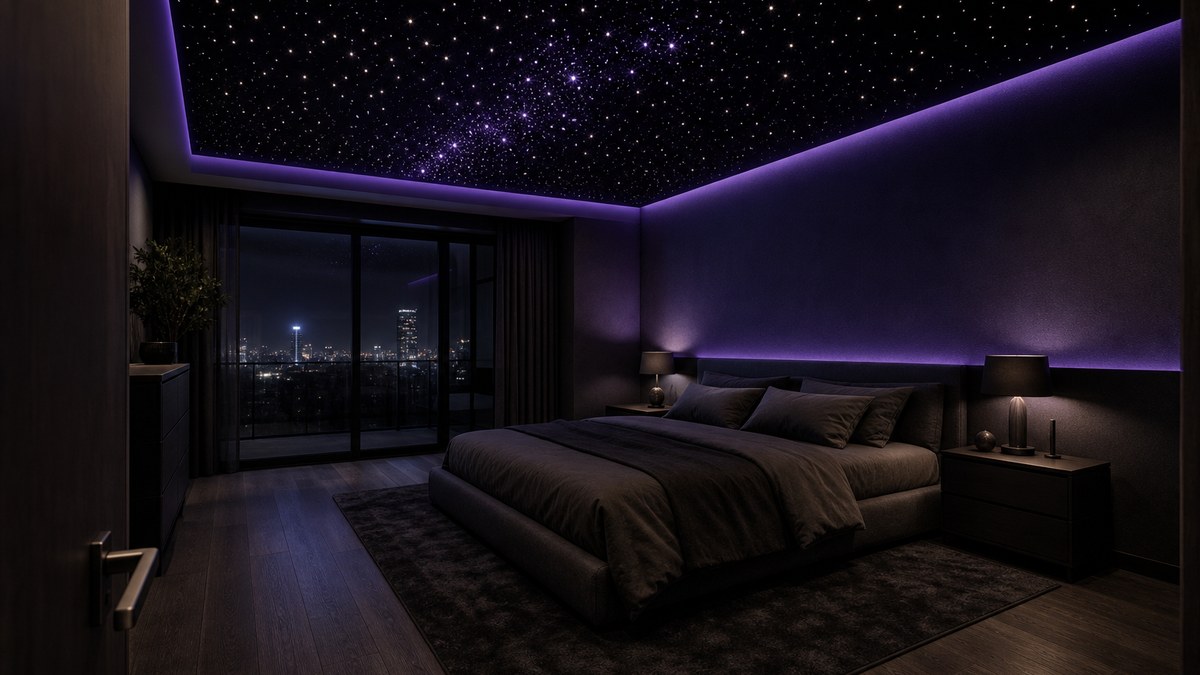
A starry night ceiling can be made four main ways in 2026: a plug-in star projector ($30–$300), glow-in-the-dark paint or stickers (under $200), LED-chip "star" kits, or real fiber optic stars — either hand-drilled or built into premade panels at about $55 per square foot (about $77 per square foot installed). Only fiber optic gives you true pinpoint stars that stay sharp, last 20+ years, and look the same every night.
That price gap is huge, so it's fair to ask what you actually get for the money. A projector paints a soft glow across the room. Glow paint fades within hours. Fiber optic puts hundreds of real points of light into the ceiling itself. At American Starlight Ceilings, we install fiber optic star ceilings nationwide, but we also tell people when a $40 projector is the smarter choice — like a dorm room, a rental you're leaving next year, or a kid who will want a dinosaur theme by spring.
In this guide, you'll see every way to create a starry ceiling side by side: how each one looks, what it costs for a real room, how long it lasts, how hard it is to install, and which rooms each option suits best. By the end, you'll know exactly which starry night ceiling fits your space and budget.
✦ Quick Answer: What's the Best Way to Get a Starry Night Ceiling?
It depends on how long you'll keep it and how real you want it to look. Here's the short version:
- Star projector: about $30–$300, plug in tonight, soft projected glow — best for renters, dorms, and trying the look
- Glow paint or stickers: usually under $200 in materials, no power — glows brightest for the first minutes, then fades over a few hours
- LED-chip star kits/panels: cheaper than fiber, but stars look like uniform dots and each chip carries current
- Hand-drilled fiber optic: real stars, but DIY materials often reach $4,000–$5,500+ for a full room and usually need attic access
- Premade fiber optic panels: about $55/sq ft or ~$77/sq ft installed — 7–11 stars per sq ft, no attic, most rooms done in 1–2 days
- Lifespan: fiber strands stay clear 20+ years; the LED light engine is rated 50,000+ hours
- Warranty (our installs): 2-year product warranty plus a lifetime workmanship warranty
What Is a Starry Night Ceiling?
A starry night ceiling is any ceiling treatment that makes a room feel like it's open to the night sky. People also call it a starry ceiling, a starscape ceiling, a star ceiling, or a starlight ceiling. The goal is always the same: look up in a dark room and see stars instead of drywall.
What changes from one method to the next is where the light comes from. With a projector, the light comes from a box on your nightstand and lands on the ceiling. With glow paint, the ceiling stores light during the day and slowly releases it. With fiber optics, light travels from a hidden LED engine through hundreds of clear strands that end flush with the ceiling — so each star is an actual point of light, not a reflection.
That one difference explains almost everything else in this guide: how sharp the stars look, whether they move, how long they last, and why the prices are so far apart.
Why do people want a starry ceiling?
Most homeowners tell us one of three things. They want a calmer bedroom that helps them unwind. They want a home theater that feels like a real cinema. Or they want one "wow" room that guests remember. A starry night ceiling does all three, and it works with almost any style — modern, traditional, or kid-themed.
5 Ways to Make a Starry Night Ceiling (Compared)
Here's every common method, from a quick weekend fix to a permanent upgrade. We've included the honest pros and cons of each — including the ones that aren't ours.
1. Star and galaxy projectors
A star projector sits on a shelf or nightstand and throws a pattern of light onto the ceiling and walls. Many add a moving "nebula" color wash, a timer, and a remote. Prices run from about $30 for a basic model to $300 or more for planetarium-style units with sharper optics.
Pros: instant, cheap, portable, and renter-friendly. Cons: the stars are projected spots, so they look softer and spread onto walls, doors, and furniture. Textured or popcorn ceilings blur them. You also need a fully dark room, and the projector must stay out in the open where it can be bumped.
Safety note on laser projectors: Some star projectors use a small laser to create sharp green or red points. Consumer laser products are labeled by class, and you should never look into the opening or let kids stare into it. Keep the projector above eye level and follow the label. Fiber optic ceilings have no laser and no electricity at the ceiling surface.
2. Glow-in-the-dark paint and stickers
Glow-in-the-dark (phosphorescent) paint and stickers absorb light during the day, then release it after you switch the lights off. Newer strontium aluminate pigments glow longer than older zinc sulfide types, but all of them follow the same pattern: brightest for the first few minutes, then a slow fade over a few hours.
Pros: very low cost, no wiring, and a fun DIY project. Cons: a greenish tint, no dimming, faded stars by the middle of the night, and dots that can look like paint splatter in daylight. Stickers can also pull paint when you remove them.
3. UV (blacklight) star paint
Invisible UV paint is dotted onto the ceiling and lit by a blacklight. In daylight the ceiling looks plain, and at night the stars appear. It looks better than basic glow stickers, but it needs a UV fixture in the room, and the effect has a purple cast that some people find harsh for sleeping.
4. LED-chip star kits and "LED star panels"
Some products marketed as star panels use tiny LED chips behind pinholes instead of fiber optics. They're usually cheaper, but every star is the same size and brightness, so the ceiling looks more like a pegboard than deep space. Each chip carries current, and when chips fail you get dark spots that are hard to fix. Our guide to LED vs fiber optic star panels explains the difference in detail.
5. Fiber optic star ceilings (hand-drilled or premade panels)
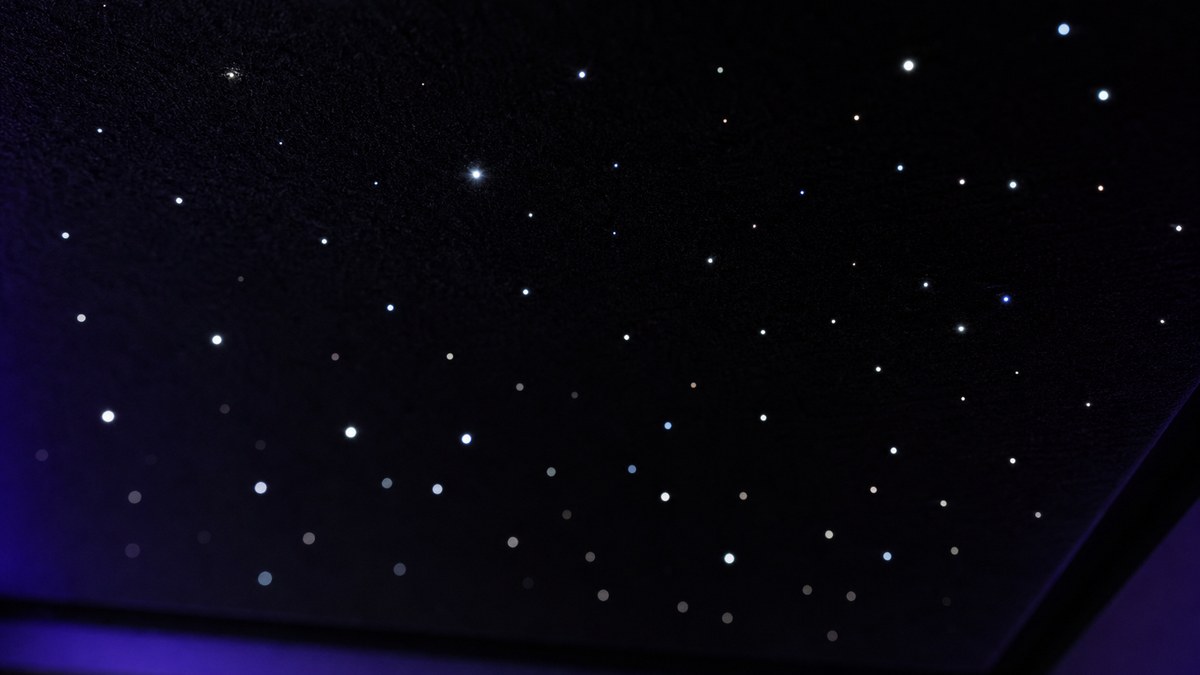
Fiber optic is the method used in high-end home theaters, luxury cars, and premium lounges. Clear PMMA strands carry light from an LED engine to the ceiling face. Mixing strand sizes creates bright, medium, and faint stars — which is exactly what makes a real night sky look deep.
There are two ways to build one. The traditional way is to drill a hole for every star and thread fibers down from the attic. The modern way is premade panels: the fibers and engine are built into the panel at the workshop, and the panels mount to your ceiling from below. Our starlight ceiling panels page shows what's inside each one. For very large custom builds, our partners at fiber optic lighting solutions handle specialty fiber projects.
Starry Night Ceiling Options Side by Side
This table compares the five methods on the things that matter most once the novelty wears off: how real it looks, how long it lasts, and what a typical 10′×10′ bedroom really costs.
| Method | Look | Typical Cost (10′×10′ room) | Lifespan | Install |
|---|---|---|---|---|
| Star projector | Soft projected spots + color wash on ceiling and walls | $30 – $300 | A few years per unit | Plug in |
| Glow paint / stickers | Greenish dots that fade over hours | Under $200 in materials | Glow weakens over time | DIY, a few hours |
| UV star paint | Stars under a blacklight, purple cast | Materials + UV fixture | Paint lasts; needs UV lamp | DIY or painter |
| LED-chip panels | Uniform dots, same size and brightness | Varies by product | Chips can fail one by one | DIY or pro |
| Hand-drilled fiber (DIY) | Real pinpoint stars, density depends on you | $4,000 – $5,500+ in materials | Fibers 20+ yrs, engine 50,000+ hrs | 40–56 hours, attic usually needed |
| Premade fiber optic panels | Real pinpoint stars, 7–11 per sq ft, mixed sizes | ~$5,500 panels / ~$7,700 installed | Fibers 20+ yrs, engine 50,000+ hrs | 1–2 days, no attic |
Want to dig into the numbers behind the fiber optic rows? Our DIY star ceiling cost breakdown compares hand-drilled kits with premade panels line by line.
Star Projector vs Fiber Optic Star Ceiling: The Real Difference
This is the comparison we're asked about most. A galaxy projector and a fiber optic ceiling both promise "stars on your ceiling," but they solve different problems.
How the stars look
A projector throws light through a lens or a laser grating, so each "star" is a small spot of light landing on paint. The farther the ceiling, the bigger and softer the spots. Fiber optic stars are the light source itself, so they stay pinpoint-sharp from any angle and any seat in the room.
Where the light goes
Projected light doesn't stop at the ceiling. It lands on walls, curtains, your TV, and you. That can be fun in a kid's room, but it's distracting in a theater and can keep some people awake. A fiber optic field stays exactly where you put it — on the ceiling, inside a clean border.
Daytime look and clutter
With a projector, there's always a device on display, plus a cord. With fiber optics, the ceiling looks like a finished panel during the day, and the light engine hides in a closet, cabinet, soffit, or AV rack. If you don't have attic access, that's fine too — see our star ceiling without attic access guide.
Effects and control
Projectors usually include color and motion out of the box. Fiber optic ceilings include white starlight with dimming in the base price, and effects are planned into the light engine. Twinkle, shooting stars, color changing, and smart control are custom add-ons with extra cost — not part of base pricing. If color is high on your list, read our color changing star ceiling guide first.
| Factor | Galaxy / Star Projector | Fiber Optic Star Ceiling |
|---|---|---|
| Star quality | Soft projected spots | Pinpoint stars, mixed sizes |
| Light spill | Walls, furniture, people | Ceiling only |
| Works on textured ceilings | Blurs on popcorn or knockdown | Panels cover the texture |
| Daytime look | Device + cord on display | Finished ceiling, hidden engine |
| Heat or current at the ceiling | None at ceiling (device in room) | None — fibers carry light only |
| Cost | $30 – $300 | ~$55/sq ft panels, ~$77/sq ft installed |
| Best for | Renters, dorms, trying the look | Bedrooms, theaters, homes you'll stay in |
Honest tip: If you're not sure you'll love stars overhead, buy a $40 projector first and live with it for a month. If you find yourself turning it on every night — and wishing it looked sharper — that's a good sign a permanent fiber optic ceiling is worth it.
How Much Does a Starry Night Ceiling Cost?
The cheapest starry ceilings cost less than dinner out. The most realistic ones are a home improvement project. Here's what fiber optic panels cost for common rooms, using our current pricing of about $55 per square foot for panels and about $22 per square foot for installation.
| Room / Layout | Size | Panels Only (~$55/sq ft) | Fully Installed (~$77/sq ft) |
|---|---|---|---|
| Feature field over a bed | 4′ × 8′ (32 sq ft) | $1,760 | $2,464 |
| Center field, bedroom | 8′ × 8′ (64 sq ft) | $3,520 | $4,928 |
| Full kid's room or nursery | 10′ × 10′ (100 sq ft) | $5,500 | $7,700 |
| Primary bedroom | 12′ × 12′ (144 sq ft) | $7,920 | $11,088 |
| Home theater | 12′ × 15′ (180 sq ft) | $9,900 | $13,860 |
These numbers include the panels, 7–11 fiber optic stars per square foot in mixed sizes, the built-in LED light engine, white starlight with dimming, and the Cat5 links between panels. For every factor that moves the final price, see our complete starlight ceiling cost guide and our star ceiling panels price guide.
Optional effects (extra-cost add-ons)
| Custom Add-On | Typical Added Cost |
|---|---|
| Twinkling effect | $300 – $1,000+ |
| Shooting stars | $500 – $2,000+ |
| RGB color changing | $500 – $2,000+ |
| Smart home integration | $500 – $1,500+ |
| Constellation mapping | $1,000 – $3,000+ |
Planning a fully custom sky — a real constellation map, a shaped panel, or a night sky from a special date? Our custom star ceiling cost guide and custom starlight ceiling design page show real budgets.
Budget tip: You don't have to cover the whole ceiling. A center field with an 8–10 inch plain border keeps the full "night sky" effect from the bed or couch and can cut square footage — and cost — by 30% or more.
Want a Real Starry Night Ceiling? Get a Free Layout
Send us your room size and a photo of your ceiling. We'll map your star field, suggest where to put the light engine, and send a clear quote with product and installation priced separately.
(702) 738-2218 Get Your Free Quote →What Makes a Starry Ceiling Look Like the Real Night Sky?
Whatever method you choose, the same four details separate a ceiling that looks real from one that looks like a craft project.
- Mixed star sizes. The real sky has a few bright stars and thousands of faint ones. Fiber optic panels mix strand sizes so some stars pop and others barely glow. Projectors and stickers tend to make every star the same.
- Random spacing. Even grids look fake. Stars should cluster in some areas and thin out in others, like a band of the Milky Way.
- Enough density. We place 7–11 stars per square foot. Many hand-drilled DIY ceilings end up with about half that, which can look sparse once the lights go out.
- A dark background. Stars look brightest against a dark ceiling. That's why most panels use black or deep navy fabric faces, and why bright white drywall can wash out a projector's stars.
Does brightness matter?
Yes — and more is not always better. For a bedroom, you'll often dim the stars to about 10% for sleep. For a theater, you want them bright enough to enjoy before the movie, then low during it. That's why dimming is included with every fiber optic panel system we install.
Best Starry Night Ceiling Option by Room
Bedrooms
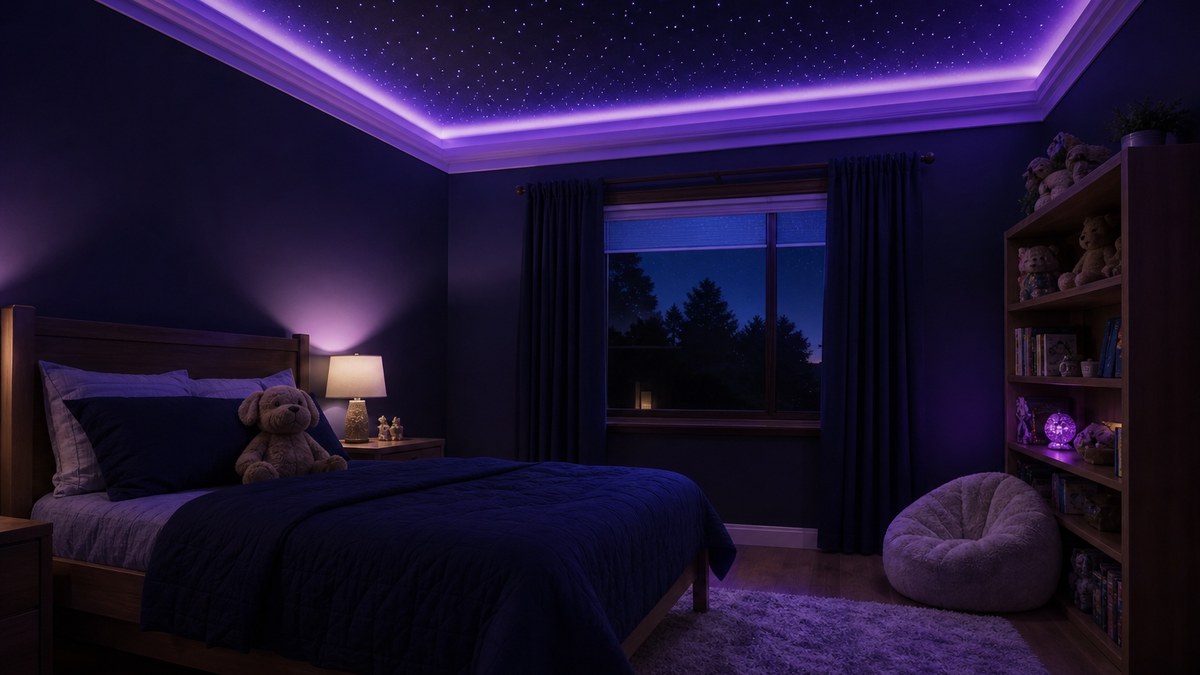
A soft white star field over the bed is the most popular starry ceiling we build. Many people choose a 4′×8′ feature field (about $2,464 installed) or a center field with a border. A projector can work here too, but light spill onto walls and the fan noise of some units bother light sleepers. See our starlight ceiling for bedroom page for layouts.
Kids' rooms and nurseries
Kids love stars, and parents love not having a laser or a hot device on the nightstand. Fiber optic ceilings have no heat or current at the ceiling face, and the light engine sits out of reach. A wall control by the door makes bedtime simple. If you'd rather start small, a projector or glow stickers are fine for a few years — just keep laser projectors above eye level.
Home theaters and media rooms
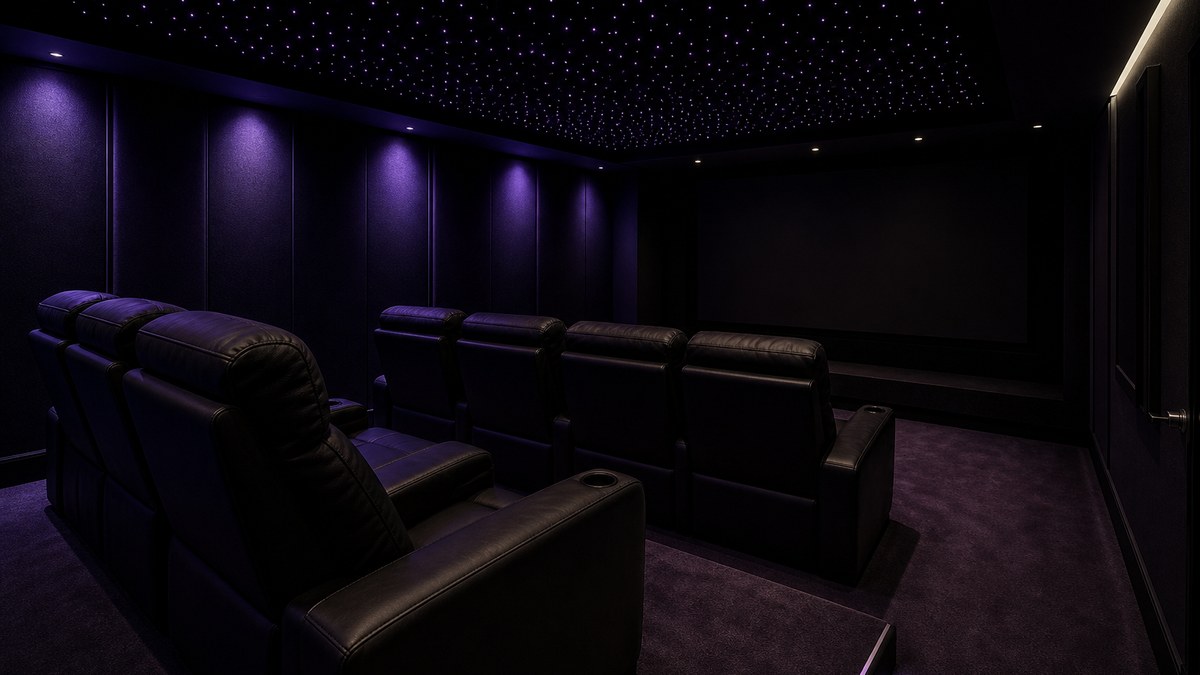
This is where fiber optic wins clearly. A projector would shine onto your screen, while a fiber optic field can stop 2–3 feet before the screen wall and stay dark during the movie. Acoustic star panels also absorb echo, with NRC 1.0+ options. Read our home theater star ceiling cost guide, our acoustic star ceiling panels guide, and our home theater starlight ceilings page.
Basements and game rooms
If your basement has a drop ceiling, lay-in star tiles replace the existing tiles in the grid — one of the easiest starry ceilings to install. Our star ceiling tiles for drop ceilings guide covers grid sizes and clearance.
Bars, lounges, and businesses
For commercial spaces, a starry ceiling becomes part of the brand — the photo guests share. Projectors rarely survive a busy venue. See our commercial star ceilings guide and our commercial starlight ceilings page. For outdoor areas and water features, our partners at pool and aquatic lighting finish the rest of the space.
How a Fiber Optic Starry Night Ceiling Is Installed
If you choose fiber optic panels, installation is faster and cleaner than most people expect. A 2-person crew covers about 75–90 square feet per day, so most rooms take 1–2 days.
- Layout: We map the star field around lights, vents, detectors, and speakers, keeping an 8–10 inch border from walls.
- Power: One standard outlet powers a plug-in supply. The light engine and supply go somewhere hidden but reachable — a closet, cabinet, soffit, or AV rack.
- Mounting: Panels attach to the joists from below, or drop into an existing grid. No holes are drilled for individual stars and no attic work is needed.
- Linking: Panels connect with low-voltage Cat5 cables in a daisy chain.
- Testing and handover: We power up, test dimming and any add-on effects, and walk you through the controls.
For the full process, read our starlight ceiling installation step-by-step guide. Prefer to do it yourself? Premade panels are the most DIY-friendly way to get a real fiber optic sky — our DIY starlight ceiling kits page explains your options. For larger rooms, vaulted ceilings, or theaters, most homeowners choose professional starlight ceiling installation, which adds our lifetime workmanship warranty.
How to Choose: 5 Quick Questions
Still deciding? Answer these five questions and the right starry night ceiling usually becomes obvious.
- How long will you stay? Leaving within a year or two? A projector or stickers make sense. Staying put? Fiber optic pays you back every night.
- Who uses the room? Light sleepers and theater fans usually want the light on the ceiling only — that points to fiber optic.
- Is your ceiling textured? Popcorn and heavy knockdown ceilings blur projected stars. Panels cover the texture.
- Do you have attic access? If not, skip hand-drilled fiber and look at premade panels that mount from below.
- Do you want effects? Decide on twinkle, shooting stars, or color before installation, since they live in the light engine and are extra-cost add-ons.
Want to see real finished rooms? Browse our starlight ceiling gallery, read our complete guide to a starlight ceiling in your house, or explore more residential starlight ceilings. We install nationwide — check our locations page, or learn how to vet a crew in our guide to finding a star ceiling installer near you.
Commercial Lighting Applications From Our Network
A starry ceiling is often one piece of a bigger lighting plan. In Texas, our partner network handles the rest of the building, with LED lighting solutions in Dallas, Fort Worth LED lighting, LED lighting in Plano, commercial LED lighting in Arlington, and Irving LED lighting services, plus Texas-wide LED lighting and wholesale LED solutions for larger projects.
Adding a new theater room, studio, or backyard office? Modular building solutions and modular structures in Dallas can deliver the space, and we'll finish it with a starry night ceiling.
Frequently Asked Questions About Starry Night Ceilings
How much does a starry night ceiling cost?
A star projector costs about $30 to $300, and glow paint or stickers usually cost under $200 in materials. A real fiber optic starry ceiling with premade panels costs about $55 per square foot for panels or about $77 per square foot installed, which is about $7,700 for a 10x10 room.
Is a star projector as good as a fiber optic star ceiling?
No. A projector creates soft projected spots that spill onto walls and furniture, while fiber optic stars are pinpoint light sources set into the ceiling itself. A projector is a great low-cost way to try the look, but fiber optic looks far more realistic and stays on the ceiling only.
How long does glow-in-the-dark star paint glow?
Glow-in-the-dark paint and stickers are brightest for the first few minutes after the lights go off, then fade over a few hours. Strontium aluminate pigments glow longer than older zinc sulfide types, but none stay bright all night.
How long does a fiber optic starry ceiling last?
Quality PMMA fiber optic strands stay clear for 20 or more years and never burn out, because they only carry light. The LED light engine is rated for 50,000 or more hours. Our installs include a 2-year product warranty and a lifetime workmanship warranty.
Are star projectors safe for kids?
Most are safe when used as directed, but laser star projectors should never be looked into directly. Keep any laser projector above a child's eye level and follow the label. Fiber optic ceilings have no laser and no heat or electricity at the ceiling surface.
Can I make a starry night ceiling without drilling holes?
Yes. Premade fiber optic star panels mount to the ceiling from below with the fibers already built in, so no star holes are drilled and no attic access is needed. Projectors, stickers, and glow paint also need no drilling.
Can a starry ceiling change colors?
Yes. Many projectors include color modes, and fiber optic ceilings can change color with an RGB or RGBW light engine. On fiber optic ceilings, color changing is a custom add-on that typically adds $500 to $2,000 or more.
How many stars should a starry night ceiling have?
For a realistic look, aim for about 7 to 11 stars per square foot in mixed sizes. That is about 700 to 1,100 stars for a 10x10 ceiling. Fewer stars can look sparse once the room is dark.
How long does it take to install a fiber optic starry ceiling?
With premade panels, a 2-person crew installs about 75 to 90 square feet per day, so most bedrooms and media rooms take 1 to 2 days. A small 4x8 feature field over a bed can take about half a day.
What is the best starry ceiling for a home theater?
Fiber optic acoustic star panels are the best choice for home theaters. They keep light off the screen, can stop 2 to 3 feet before the screen wall, and absorb echo with NRC 1.0+ options. A projector would shine onto the screen and walls.
Ready to Look Up at Your Own Night Sky?
Tell us about your room and we'll design a starry night ceiling that fits it — from a 4×8 field over the bed to a full home theater sky. You'll get a clear quote with product and installation priced separately, a 2-year product warranty, and a lifetime workmanship warranty on every professional install.
(702) 738-2218 Get Your Free Quote →